Essential West Magazine
- Featured Artists
- Event Calendar
- Artist Biographies
- News & Press
- Educational Videos
- Podcast
- Essential West
- Learn
Learn about the latest Medicine Man Gallery happenings; all about our artist, see our educational videos about native American art and fine art, watch podcasts with your favorite artists and check out art and history-related links we think you'll enjoy.
Exploring Art, Literature, History, Museums, Lifestyle, and Cultures of the West

It amazes me that four letters - W-E-S-T - have the ability to evoke an instantaneous emotional image. Simply the act of reading these four letters has caused you to form a narrative of your west.
Can the West be distilled to its essence - a simple direction or region? I believe not; it is a deeper dive of consciousness. How America sees itself and the world defines us. Diverse cultures, strong individualism, open spaces, and raw natural beauty marinated in a roughshod history have formed this region’s unique milieu.
Our online magazine’s primary focus is to feature relevant topics in art, literature, history, museums, lifestyle, and culture; lofty goals for any publication. No single magazine can be the beckon of all things western; it is a diverse, evolving paradigm that cannot be pigeonholed. As the publisher, I hope to be the buffalo that grazes the wide expanse of western sensibility and relay to you a glimpse of how I perceive our Essential West.
- Mark Sublette
Featured Article
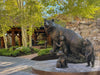
Grizzly 399 Monument Unveiled at National Museum of Wildlife Art
Grizzly 399 was born in 1996. She successfully birthed 18 cubs in her lifetime including a rare four-cub litter during the COVID-19 pandemic. Her last cub was born when Grizzly 399 was 24, a record birthing age for the species. She represented more than numbers. Often seen with her cubs near roadsides across Grand Teton National Park and...
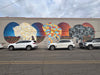
Central Avenue in Albuquerque: Something Like America
Central Avenue through Albuquerque: 1st Street through 8th Street. The old Route 66. Something like America. This is no fantasy. KiMo Theatre on Central Avenue in Albuquerque. Photo by Chadd Scott. Interspersed among the spectacular and historic Pueblo Deco KiMo Theatre, the funky/retro Arrive motel, Ex Novo Brewery, boutiques, neon, and coffee shops are homelessness and addiction. Empty storefronts. Prosperity alongside real pain. Something like America. Central Ave. through Albuquerque is seedy enough to be interesting without being dangerous. Visitors looking for upscale fantasy and the mirage that everything is just so with the country can find it across town...
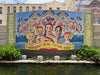
San Antonio: City of Public Art
San Antoino marks the 30th anniversary of its Public Art Ordinance this year. Always best known for its history as the site of the Alamo, since enacting the Ordinance in 1996, the city has become one of America’s most art-forward. A proliferation of murals, installations, sculptures, and tilework are dispersed across an ever-expanding metropolis now numbering more than 1.5 million residents inside the city limits. The Public Art Ordinance allocates 1% of City of San Antonio capital improvement project budgets for the creation of public art, with artworks designed to reflect the community’s unique history, culture, and aspirations. Over the...

Historic "Grounded in Clay" Pueblo Pottery Exhibition Wraps Up Nationwide Tour in Albuquerque
“Grounded in Clay: The Spirit of Pueblo Pottery” debuted in July of 2022 at the Museum of Indian Arts & Culture in Santa Fe. Over the preceding four years, the stunning exhibition traveled to the Metropolitan Museum of Art in New York, the Museum of Fine Arts, Houston, and the Saint Louis Art Museum. The nation’s most elite arts institutions. The pots have finally come back “home,” wrapping up their tour at the Indian Pueblo Cultural Center in Albuquerque. See them there through February 21, 2027, or forever hold your peace. “Grounded in Clay” was curated by the Native American...
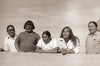
Artist Hopid at Museum of Northern Arizona
The Museum of Northern Arizona in Flagstaff highlights a lesser-known chapter in Native American art history central to its region: Artist Hopid. An exhibition series on view through April 30, 2027, features work from the groundbreaking collective formed in 1973 by celebrated Hopi artists Michael Kabotie, Delbridge Honanie, Terrance Talaswaima, Neil David Sr. and Milland Lomakema. Artist Hopid in 1976. From left Honvantewa (Terrance Talaswaima), Dawakema (Milland Lomakema), Coochsiwukioma (Delbridge Honanie), Neil David Sr., Lomawywesa (Michael Kabotie). Photo credit Jessica Welton. “They all grew up on the Hopi reservation, went to different schools, but knew each other as youngsters,” Kelley...
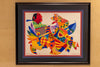
Native Art from The Howard L. and Mary Ellen Meredith Collection Donated to the Oklahoma State Art Collection
The Oklahoma Arts Council announced last month what it described as “the most significant collection of artworks gifted to the Oklahoma State Art Collection in its history.” New and now on view free to the public at the Oklahoma State Capitol are 10 works created by some of the most influential and highly recognized Native artists connected to the state. Artworks come from The Howard L. and Mary Ellen Meredith Collection. The couple’s daughters, America Meredith and Samonia Byford, directed the gift. “My parents' house is near the Oklahoma State Capitol, so we've been familiar with the art collections and...
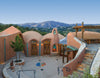
Randall Davey Home & Studio Added to National Network
What do you love most? For me, that’s art. How about second most? For me, native plants. Now think about what you love third most. In my case, nature and birds and hiking and northern New Mexico. All of things I love most magically come together in one place: Randall Davey Audubon Center and Sanctuary in Santa Fe. Davey (1887-1964) was a realist painter and leading figure of the Santa Fe Art Colony, a convening of artists from around the nation in the early 20th century. In 1920, Davey converted an 1847 Army sawmill into his studio and residence, living...
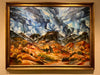
See the West in Florida at James Museum
Three monumental contemporary Western art masterpieces greet visitors to the James Museum of Western and Wildlife Art in St. Petersburg, FL. Dan Namingha’s (b. 1950; Hopi-Tewa) nearly 15-foot-long triptych Passage III (1999) first receives guests arriving to the second-floor galleries. Awesome. Namingha’s painting represents a spiritual journey through Hopi symbolism. Find the Butterfly Maiden. Colors representing the four cardinal directions: yellow (north), red (south), white (east), blue (west). Passageways to other worlds. Spirals of human migration. The vibrant, abstract painting surely confounds many first-time visitors’ expectations of cowboys and cattle drives. Hanging next to Passage III leading down a hallway...
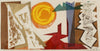
A Day in the Life of Colorado as Experienced Through Prints
What would your perfect Colorado day look like? Fresh powder at Breck followed by après at Broken Compass Brewing. Backcountry hiking in Rocky Mountain National Park with stargazing. Whitewater rafting. A Denver museum grand slam: Denver Art Museum, MCA Denver, Clyfford Still, and Anshutz Collection? Gameday in Boulder or Fort Collins. Red Rocks music festival. Find your perfect Colorado day at the Kirkland Institute of Fine & Decorative Art at the Denver Art Museum during “Round the Clock: 24 Hours of Colorado in Prints.” The exhibition consists of 24 prints, each depicting one hour of the day, illustrating a slice...
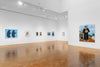
Harry Fonseca and Coyote
In 1987, Margaret L. Archuleta (Tewa/Hispanic) wrote her Master of Arts in American Indian Studies thesis at the University of California, Los Angeles, about Harry Fonseca (1946-2006; Portuguese, Hawaiian and Nisenan-Maidu descent). The document proves insightful about prevailing opinions regarding Native American art from two generations back. Opinions that seem shocking today. “American Indian culture has been treated as an exterior impulse rather than an interior force of the development of Contemporary American Indian art,” Archuleta wrote. “Previous studies analyzed Contemporary American Indian art as a motif rather than an intricately entwined cultural statement based on traditional beliefs that reflect and respond...
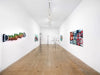
From Navajo Nation to the Whitney Biennial: Nani Chacon's Transmission Tower Sculptures
Nani Chacon (b. 1980; Diné) has been captivated by the incongruous similarities between traditional depictions of Diné deities in sand paintings and the electrical towers used by coal refineries across the Navajo Nation since she was a little girl. Chacon was born in Gallup and raised on the Navajo reservation and in New Mexico. The images of Diné gods are composed with ideas of completeness, beauty, and sacredness, while the towers are utterly utilitarian. In an imagined future where clean energy has replaced polluting fossil fuels and the towers no longer transmit power, what new function could they serve? Can...