Native Art from The Howard L. and Mary Ellen Meredith Collection Donated to the Oklahoma State Art Collection
By Chadd Scott on
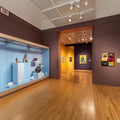
The Oklahoma Arts Council announced last month what it described as “the most significant collection of artworks gifted to the Oklahoma State Art Collection in its history.” New and now on view free to the public at the Oklahoma State Capitol are 10 works created by some of the most influential and highly recognized Native artists connected to the state.
Artworks come from The Howard L. and Mary Ellen Meredith Collection. The couple’s daughters, America Meredith and Samonia Byford, directed the gift.
“My parents' house is near the Oklahoma State Capitol, so we've been familiar with the art collections and galleries there for most of our lives,” Meredith, an artist and arts writer, said. “Amber Sharples, the director of the Oklahoma Arts Council, is a long-standing family friend who works miracles. The Oklahoma Arts Council has done incredible work to bring in diverse art into the capital.”
The Oklahoma Arts Council is the official state agency for the support and development of the arts. The Oklahoma State Art Collection is a visual anthology of the history of artistic expression in the state established in 1971 through a grant from the National Endowment for the Arts. Comprised of works by Oklahoma’s most notable artists, the collection features more than 200 artworks in mediums ranging from painting and photography to ceramics, sculpture, and fiber art, making Oklahoma’s capital building one of the best places in the state to see art.
Native American artists and Indigenous artists from Oklahoma are well represented in the Collection.
New additions from The Howard L. and Mary Ellen Meredith Collection include:
· “This Little Piggy Went to Market” by Benjamin Harjo, Jr. (1945–2023; Absentee Shawnee/Seminole)

“This Little Piggy Went to Market” by Benjamin Harjo, Jr. (1945–2023; Absentee Shawnee Seminole) from the Oklahoma State Art Collection. Photo by Oklahoma Legislative Service Bureau, courtesy of the Oklahoma Arts Council.
· “Untitled” watercolor by Norma Howard (1958–2024; Choctaw Nation/Chickasaw/Mississippi Choctaw)
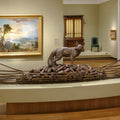
· “Untitled” mountain lion pelt quiver by Vanessa Paukeigope Jennings (b. 1952; Kiowa Tribe/Na’ishq Apache/Gila River Pima)
· “Funeral” by Ruthe Blalock Jones (b. 1939; Shawnee Tribe/Delaware/Peoria)
· “Industrial Trade Blanket #1” by Shan Goshorn (1957-2018; Eastern Band Cherokee)
· “Untitled” mixed media by Doc Tate Nevaquaya (1932-1996; Comanche)
· “Evolving Traditions” by Jane Osti (b. 1945; Cherokee Nation)
· “Untitled” acrylic painted rawhide shield by Juanita Pahdopony (1947-2020; Comanche)
· “Untitled” ceramic vase by Jeri Redcorn (b. 1939; Caddo/Citizen Potawatomi)
· “Four Horsemen” by Dick West (1912-1996; Southern Cheyenne)
“This gift features some of the most significant voices in the visual arts from our state whose transformative careers shaped generations of artists and established Oklahoma as an epicenter of Native art in the 20th century and beyond,” Sharples said in a press release announcing the donation.
“We wanted these artists to be represented in the state collection to reach broader audiences, and we know that the artwork will be cared for, exhibited, and available for loan by other institutions,” Meredith added.

“Untitled” ceramic vase by Jeri Redcorn (b. 1939; CaddoCitizen Potawatomi). from the Oklahoma State Art Collection. Photo by Oklahoma Legislative Service Bureau, courtesy of the Oklahoma Arts Council.
Two Lives with Art
Howard L. Meredith’s (1938-2003) mother Lillian Meredith was a recreational painter. Her son also picked up painting as a hobby. He began collecting Indigenous art while performing community development work in Alaska, acquiring Alaska Native artwork.
“Later, he worked in the Indian office of the Episcopal Church and traveled to reservations across the country and collected artwork,” America Meredith explained. “He was dean of students and later vice president at Bacone College when Dick West was director of their Indian art program, so he collected from the students. A consultant estimated that his Dick West painting was the most valuable artwork in my parents' entire collection. My dad and Dick West traded it, but they wouldn't say want they traded it for.”
Mary Ellen Meredith (1946-2024; citizen of the Cherokee Nation) was equally as steeped in the arts. She was greatly influenced by her Cherokee Nation grandmother, Maude McSpadden Milam, who, like her mother, promoted Cherokee baskets to art collectives as a way for Cherokee women to earn needed income.
“My mom began curating Native art shows at the Center for the American Indian in 1978 and later became interim director of the Cherokee Heritage Center, which hosted two competitive annual art shows and changing exhibitions,” America Meredith said. “They were both always involved in the arts and always had artwork in their home. They were close friends with Benjamin Harjo Jr., who was an artist, but also a supporter of the arts in general.”
The couple admired and acquired Harjo's painting and prints to the point that Meredith said her mom's primary den was nicknamed "The Barjo."
Like most serious collectors, the collectors who have artworks donated to museums to carry on their legacy, the Meredith’s collection was focused. They collected from Native artists who they knew personally.
“My dad was a teacher for decades at the University of Science and Arts in Chickasaw and taught and wrote about Southern Plains artists, so he collected from artists from the Southern Plains,” America Meredith said. “My mom predominantly collected Cherokee Nation, United Keetoowah Band, and Eastern Band Cherokee artists who she met in Tahlequah or traveling to the Qualla Boundary.”
The Meredith’s were working people raising a family. Their esteemed collection was built through decades of work and relationships, not wealth.
The couple sets an example for other would-be collectors wondering how to put something significant and meaningful together without big dollars.
“Native art is accessible to most people, especially Oklahoma Native artwork,” Meredith said. “Most people can afford original Native art. When they were younger, my parents collected from students and emerging artists, they collected prints, and they did trades.”
Prints, photography, watercolors. All can be purchased at more affordable prices than oil paintings and sculpture. Visit the Native American art markets. Not just Santa Fe. They take place across the country year-round. Buying direct from artists cuts out the gallery markup. Student shows at colleges, estate sales, auctions; all have bargain gems for people who know what they’re looking for.
Look. Learn. Focus.

For the Enjoyment of All
The Meredith sisters selected major works by Oklahoma Native artists not already represented in the state collection for their gift.
“We selected these artworks, one by each artist, because they should be represented in the state's collection. These artists are incredibly significant to Oklahoma's history, and the public should be aware of them,” America Meredith said. “Vanessa Jennings, Ruthe Blalock Jones, Jane Osti, and Jeri Redcorn are living artists, and they should be honored.”
Considering the state of Oklahoma’s deplorable record of treating Native people, I asked America Meredith if she and her sister had any pause in donating these items to the State.
“This is similar to why Native Americans serve in the U.S. military in such high numbers,” she explained. “This is our home. Oklahoma is the home to 38 federally recognized tribal nations, including our tribe, the Cherokee Nation. In the front of the state capitol stands As Long as the Water Flow, a monumental statue by Allan House (1914–1994; Fort Sill Chiricahua Apache), which is a strong visual reminder that our tribal nations and treaty rights are forever.”
Meredith is quick to point out that the state of Oklahoma is not one thing with only one attitude toward Native people. For all the harm done to Native people in Oklahoma, there’s a flip side.
“We have amazing state legislatures who are fighting for tribal sovereignty and for the well-being of the residents of Oklahoma,” she continued. “There have always been Native people serving in Oklahoma's state government. Oklahoma has one of the most progressive state constitutions because it borrowed heavily on the constitution for the proposed State of Sequoyah.”
Howard L. and Mary Ellen Meredith continued in that tradition, honoring their people and culture, working for a better day for all Native people in Oklahoma, and often doing that work through the arts.
“My parents played an important role in helping to build up the Native art infrastructure here in central Oklahoma,” America Meredith said. “They were part of the team that created the Center for the American Indian, the first Native-led museum in Oklahoma City, back in 1978. My mother and Mary Jo Watson (Seminole Nation) curated exhibitions there on a monthly basis at the beginning!”
Bravo to the family for gifting the collection to the public for the enjoyment of all instead of sending it to the secondary market for personal financial gain and the enjoyment of a scant few.
Other pieces from the Meredith Collection have been donated to esteemed institutions including the Smithsonian National Museum of the American Indian in Washington, DC, the Institute of American Indian Arts Museum of Contemporary Native Arts in Santa Fe, the Museum of the Cherokee People in North Carolina, the Nelson-Atkins Museum of Art in Kansas City, the First Americans Museum in Oklahoma City, and the Osage Nation, Muscogee Nation, and Cherokee Nation.
The sisters also kept artworks holding personal significance and shared others with their parents' friends, family members, and artists they admired.